


Country -
Building a legacy
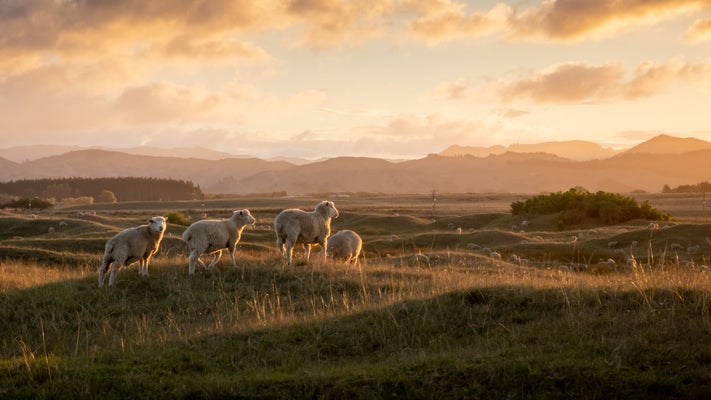
Most of New Zealand rural sector is enjoying a ‘purple patch’, raising questions for high-equity owners keen to deal with succession and legacy creation.
The massive surge in profitability in New Zealand’s agricultural and horticultural sectors was highlighted in the latest Federated Farmers Confidence Survey, released in early March from data captured through January.
It shows 70 percent of overall respondents saying their farms will be profitable this financial year - the best result since the twice-yearly survey began in 2009.
The recovery since 2023-24 is now firmly established across most sectors, with the number of profitable dairy farms stable at 81 percent, and meat and wool farms improving substantially.
One of the only exceptions is the arable sector which is lagging behind, battling high input costs, atrocious harvest weather and sombre returns for grain.
Still, just over 40 percent of arable farmers who responded to the survey said they were expecting to be profitable this financial year.
How deep the impact from the latest Middle East conflict will be for New Zealand farmers and growers is unknown.
Two of agriculture’s big cost inputs, fuel and fertiliser, have already increased in price, and there will be wider trade impacts to come for dairy and meat exports to the region.
But regardless of the geo-political scene, back in New Zealand the big question remains for farmers and growers with stronger balance sheets and robust cash flows - what is their next move?
This is especially the case for families confronting generational change.
Is this the chance for parents to create a legacy that provides for them and makes ownership manageable for the next generation of growers and farmers?
Balance sheets are stronger, cashflows are robust and debt levels for many farm owners are trending down faster than bankers expected.
Since Christmas, the Global Dairy Trade auction average price has lifted 26 percent, boosting payout confidence. The upcoming Fonterra capital distribution will add another meaningful injection of liquidity into an already well-capitalised sector.
At the same time, a persistent wealth gap is locked in between the exceptionally well-capitalised top-end of the dairy industry and a large group of capable operators who struggle to access ownership pathways at scale.
Overlay the growing succession issue, and the investment challenges confronting the sector become more complex.
Re-investment and diversification
Bayleys national director rural, Duncan Ross says rural landowners with strong equity positions should be thinking about redefining the highest and best uses of their land and investigating how to lift returns in other areas.
“For sheep and beef farm owners with good levels of equity who are running properties with low returns relative to other sectors like dairy for instance, is it time for them to be considering using that equity to invest in a better-quality property with higher returns than what they have now?”
Ross says this could include investment into kiwifruit, rural syndications or diversification into a commercial property investment.
“Splitting risk and return profiles through a diversified investment strategy helps to protect against market fluctuations and create an asset portfolio more suitable for succession,” he says.
Complacency is likely to be a bigger risk than failure when cash is flowing in and balance sheets are strong, so finding the right group of people to lean on for advice and robust scrutiny of possible strategies should be a critical first step.
Bayleys Canterbury rural valuer Geoff Beaumont says understanding the value of farm assets is often the starting point for wider discussions among families and business partners.
He says corporate and larger-scale syndicate-owned enterprises have always emphasised return on capital in their investment criteria, especially those operating in the dairy sector.
But he is seeing individual farm owners more cognisant of the metric when they are evaluating new opportunities.
It is one reason why he is not expecting sheep and beef farm values in the Canterbury region to immediately rise sharply off the back of strong farmgate returns for sheepmeat and beef, and improving wool prices.
“I think we’re seeing a lot more emphasis on the return side of a farm business when buyers think about what they can afford to pay to buy a sheep and beef farm,” he says.
At current values, Beaumont says on an average efficient analysis, entry-level dairy farms are generating more than double the return on capital of a typical sheep and beef farm that can cost about the same per hectare to buy.
“I recently did an analysis which showed an entry-level dairy farm which sold in Mid-Canterbury was generating an economic farm surplus of about $535,000 versus about $220,000 for a sheep and beef farm which had sold for a similar price.”
In the analysis, the dairy farm has a 5.5 percent yield compared with the sheep and beef unit at more like 2.1 percent. Beaumont says it would take a sustained period of strong sheep and beef returns before it filters through to farm values.
“To increase the return on capital for the sheep and beef farm, either your income has to increase, which we're getting a little bit with red meat at the moment, or values reduce, or a mixture of both.”
He’s expecting dairy farm values to maintain current levels, in spite of the scarcity of farms being listed for sale at present.
Beaumont says the unexpectedly high sale price of Kyle Park, an immaculate dairy unit near Dorie brought to the market by Bayleys late last year, has created a lot of discussion over values across the region and beyond.
Kyle Park sold at about $87,000 per hectare, considerably higher than recent sales for farms sold on the open market, where prices ranged in the mid to high $60,000s per hectare.
“As a valuer, that sale just blows everything out of the water, so it is regarded as an outlier. To be fair, there was an underbidder who wanted it, too,” he says.
“But every dairy farm in Canterbury is not worth $87,000 per hectare after one exceptional sale result.”
Saying that, even at that price, the farm is still capable of generating a good return on capital.
“Kyle Park’s production and cost base, under an average efficient scenario, shows it will still generate a return on capital of about 5.98 percent based on the forecast payout,” he says.
Beaumont says top tier dairy farm values have lifted through this season in Canterbury.
Some sales have been completed at 20 percent above last year’s values, creating an “equity bounce” for owners which he says could spark more interest in farmland or diversification.
It is likely that some of the corporate and large-scale family-owned dairy enterprises operating in Canterbury will already be exploring opportunities to expand off the back of sustained high returns.
“They see strong returns, they operate in the area and know their systems and they have capacity to buy farms and that is fuelling the supply-demand curve for dairy.”
Land use conversions
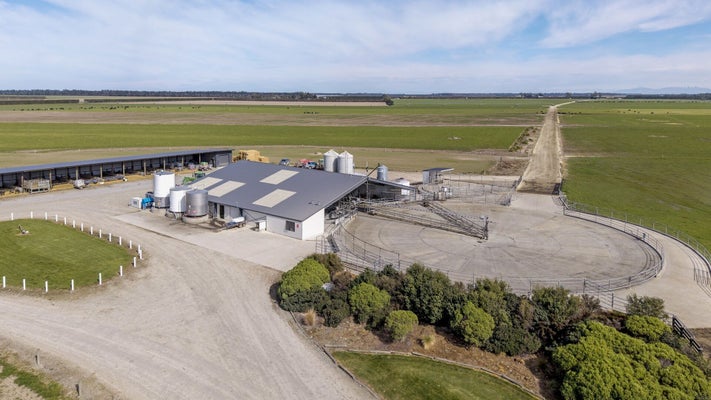
Another factor that could influence farm values is the need for more land in the region for wintering cows and grazing replacement heifers from the new conversions.
One possible source of suitable land is the arable sector which has been under significant financial pressure in recent years.
Cropping farmers have been hit with weak returns for crops and in some cases, severe damage from hail storms which decimated crops across Canterbury between last Christmas and New Year, resulting in the worst losses ever recorded.
“In a year where the returns weren’t going to be great, for many arable farmers, it was made worse by the weather,” he says.
The pressure has already led some arable farming enterprises to consider converting to dairy or switching to dairy support, or a mix both. Many arable farms already have irrigation and good farm infrastructure in place, leaving effluent consents, one of the only major compliance hurdles to overcome to undertake a conversion.
Beaumont says there have been two recent irrigated arable farm sales in Canterbury at more than $50,000 per hectare. One is now being converted to dairy and the other is remaining a cropping enterprise.
Converting arable land that costs $50,000 per hectare to purchase is not a short-term ‘convert-and-sell’ option, he says. It is a longer-term venture that needs to create a good return on capital.
Ross says spreading risk by investing off-farm is becoming a popular route for farm owners to take, especially those dealing with generational change.
Investing in commercial or industrial buildings is another option some farm owners with surplus cash or equity take to offset farm income risk or create options for future retirement.
“For some farmers, this could be part of their succession plan so they have a regular rental income to help sustain their retirement living.”
Bayleys is uniquely positioned to deliver expertise and opportunity across all sectors, including commercial, residential, syndications and support services like property management, valuation and mortgage broking.
“With the Altogether Better nature of our business, you are only one call away from being connected to the right asset class expert, whether local or nationwide,” Ross says.
“Buying residential rentals is another option for some farmers. Of course, you get a regular rental income and any capital gain over time as well, but with anything in property, it has its risks,” he says.
Ross says investing away from the farm shouldn’t just be an ‘age-and-stage’ decision for farm owners.
“The sooner rural property owners start to think about building their legacy, the better.”
Contact us


