


Residential -
Developers lead the turn
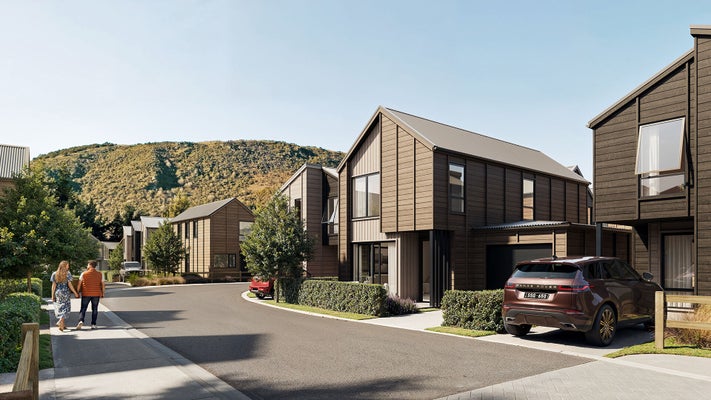
Artist's impression of Gibbons Co.'s The Links, Wanaka
In New Zealand’s new-build sector, the clearest signal of recovery isn’t price – it’s the quiet but decisive return of developer activity.
Property markets don’t pivot on sentiment alone, they pivot on capital – and more specifically, who is prepared to deploy it first, says Bayleys National Director of Projects, Suzie Wigglesworth.
“That distinction matters. Buyers respond to conditions, but developers create them. By committing capital and taking on delivery risk, they determine what gets built, when it's delivered, and at what price – shaping the environment in which buyers make decisions.
“By the time pricing data confirms a recovery, the most strategic opportunities have already been secured.” That shift is now playing out across New Zealand's new-build sector, with Wigglesworth pointing to a clear lift in activity across Bayleys’ residential projects.
“New developments are being advanced, staged releases are being absorbed, and previously paused projects are no longer positioning for a future upturn; they are building into it.
“For purchasers, that shift is significant – it signals the point in the cycle where choice still exists, but momentum is beginning to build behind it,” she says.
Demand, reordered
“We’re seeing a reconfiguration of buyer demand across the new-build and development sector, with purchasers re-entering the market at defined price points - and projects aligned to those segments commanding the most attention,” says Gavin Lloyd, Bayleys General Manager of Residential Projects.
“At the entry-level, first-home buyers and investors are reactivating where homes meet a clear affordability threshold.”
In Queenstown, design-led housing in Frankton continues to generate strong activity, with its staged releases resonating in one of the country’s most supply-constrained markets.
Similarly, The Grove at Wooing Tree in Cromwell is drawing interest from buyers seeking a lower entry point into Central Otago, supported by flexibility through visitor accommodation consent.
“These developments are not simply benefiting from improved sentiment. They’re absorbing demand because they’re precisely calibrated to a defined audience.
“For buyers, this is the window - access to quality product in tightly held locations, before demand tightens availability.”
Further up the spectrum, Lloyd says the downsizer market is also re-engaging, particularly where uncertainty has been removed.
“At Elizabeth Towers in Tauranga – a completed 119-residence development within the Thirty Eight Elizabeth precinct - the issuance of titles has shifted buyer behaviour. With construction complete and amenities operational, purchasers are responding to the security of a fully realised community.”
He notes the result has been immediate, with several contracts in negotiation, reflecting a cohort that has remained financially capable but required a higher level of certainty to transact.
“In practical terms, it marks the point at which consideration becomes action, particularly for buyers who have been waiting for delivery risk to clear before committing.
“This is a consistent pattern across the market – demand is present, but it can be conditional.”
At the premium end of the market, that conditionality becomes even more selective.
In Auckland, projects such as Pillars are demonstrating the depth of demand for low-density, design-led apartment living in prestigious locations.
Wigglesworth says sales activity has remained strong, particularly where architecture, position and delivery credibility are aligned.
“Across comparable developments, we’re also seeing continued engagement at the upper end, with well-located boutique offerings achieving traction where product quality and scarcity are evident,” she says.
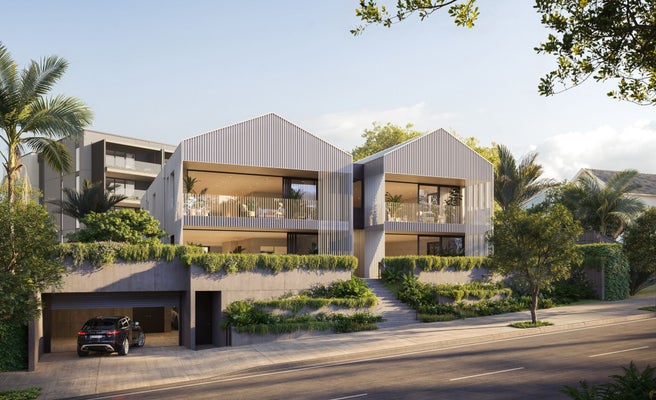
Artist's impression of Precinct Properties' Pillars development
Development strategy, refined
For developers, the implications are structural, rather than cyclical.
“The market won’t reward a generic product,” says Wigglesworth.
“Buyers are seeking alignment between price, local amenity, connectivity and finish. The projects gaining traction are those designed with a clearly defined purchaser in mind, delivered with a level of certainty that enables decision-making.
“For purchasers, that alignment provides a clearer framework for decision-making – not just what to buy, but when. Residences that meet these criteria are increasingly being absorbed earlier in their lifecycle.”
This is evident in the types of developments now progressing.
In Wānaka, Gibbons Co.’s The Links, a 257-home masterplanned community adjacent to the golf course and Three Parks precinct, is attracting strong early interest by offering a more accessible entry point into a high-value market. Its mix of compact, low-maintenance homes and staged delivery reflects a deliberate response to demand from both owner-occupiers and investors.
A further Wānaka project by Redwood Group is set to launch shortly, reinforcing the town’s transition from secondary lifestyle destination to primary growth market.
Elsewhere, early-stage indicators are beginning to reappear in the land sales market.
“Stage one of Clevedon Meadows is nearing sell-out; activity is building at Warkworth Ridge – positioned at the gateway to the Matakana Coast - and new projects such as Clayden’s by Templeton Group are entering the pipeline.
“Recent fast-track approval of Winton’s Sunfield development adds another layer, signalling confidence not just in current absorption but in future supply requirements,” Lloyd says.
“Land activity is more measured, but it is significant, signalling a renewed willingness to commit to longer-term development. For buyers, this is often the phase where future supply is being shaped, but not yet fully priced.”
Selective global influence
Overlaying domestic dynamics is a more focused re-entry of international capital.
Changes to the Active Investor Plus (AIP) visa, allowing qualifying overseas buyers to purchase or develop residential property above $5 million, are beginning to register at the premium end.
While not yet a volume driver, Wigglesworth says the policy shift is contributing to targeted transactions such as a current sub-penthouse negotiation in Auckland.
“As with local demand, this capital is highly selective, favouring quality, scarcity, and deliverability.”
Wigglesworth says the defining feature of the current market is leadership, not momentum.
“Developers are acting ahead of confirmation. They’re acting on forward-looking assessments of demand, supply, and buyer behaviour – and in doing so, setting the direction of the cycle.
“For purchasers, that matters. By the time confidence shows up in pricing, the advantage has largely gone. The opportunity sits with those who recognise the shift early.”
Contact us


