


Total Property -
Private money leads

Last year, private capital again took the crown for the largest share of commercial real estate deals globally – so what’s driving this activity?
Private wealth remains the dominant force shaping global real estate markets, overtaking institutions as the primary driver of investment activity. The advantage comes down to capital that is more agile and less constrained by regulation, according to Bayleys’ global real estate partner, Knight Frank.
Knight Frank’s 20th edition of The Wealth Report shows that private capital, led by ultra-high-net-worth-individuals (UHNWIs) and family offices, has been the dominant buyer of global commercial real estate for five consecutive years. In 2025, these investors deployed US$464 billion, significantly outpacing the US$347 billion invested by institutional capital.
With Knight Frank citing that around US$144 billion of institutional capital is preparing to re-enter the market this year, private capital’s advantage is crystalising. Its speed of execution, flexible capital structures and higher risk tolerance are allowing it to transact earlier in the real estate cycle and hold through volatility, which widens the gap with less nimble institutional buyers.
Family offices are evolving into sophisticated, globally oriented investment platforms, and private capital is increasingly favouring direct deals, co-investment structures, and value-add real estate strategies.
While wealth remains heavily concentrated in the United States, growth is accelerating across India, wider Asia, and other emerging markets with circa-89 people per day crossing the US$30m UHNWI threshold. This means there’s more capital competing for a limited pool of high-quality assets and reinforcing pricing resilience at the top end of the market.
Push, pull dynamics
The report highlights that private capital is increasingly opportunistic and mobilising across borders, guided by tax considerations and shifting geopolitical risk, resulting in intensifying global competition for capital and pressure that will inevitably flow through to local markets.
Asia-Pacific cross-border capital is rebounding, with HNWI investment at its highest level since 2019, and it is significant to note that the New Zealand government’s refreshed Active Investor Plus Visa has attracted close to $4 billion in capital either invested or committed within its first year.
The mobilisation of global capital presents both an opportunity and a challenge for New Zealand, says Bayleys national director commercial and industrial and lead for the firm’s capital markets arm, Ryan Johnson.
“Property delivers control and visibility that financial assets simply don’t. There’s opportunity to attract globally mobile capital into next-generation assets, alongside the challenge of ensuring that infrastructure, policy settings and regulatory frameworks are strong enough to support that investment.
“Private capital is no longer simply present in the market, it is increasingly shaping the pace, structure, and execution of transactions.
“As demonstrated by Bayleys transactional data, we’re seeing a shift away from traditional institutional dominance for large-scale commercial and industrial assets, with private investors now setting the tone for the market.”
For vendors, the rise of private wealth expands the buyer pool and creates more dynamic competition for assets. For developers, it opens new channels for funding and partnership, often with greater flexibility than institutional capital, and for investors, it signals a more competitive environment where decisiveness will be critical to performance.

Doors open for smart capital
Bayleys director of capital markets, Jason Seymour notes that while domestic private capital is facing several headwinds, including geopolitical uncertainty, an election year, and ANZ’s forecast of three OCR increases in 2026, there are several counterbalances.
“These market conditions are opportunities for confident, counter-cyclical capital to acquire repriced assets in a lower competition environment and potentially acquire complete or partial interests in high-quality assets which may not be available to them in a stronger market.
“Those doors often close quickly as wider market confidence increases, capital constraints fall away, balance sheet pressure eases, and divestment strategies return to hold or acquisition.
“Now is the time for smart capital to be positioning for proactive targeted acquisition of assets both on- and off-market.”
Despite ongoing geopolitical and economic uncertainty, the underlying fundamentals for commercial property remain sound. Johnson says the Knight Frank report reinforces that investors are recalibrating, becoming more selective, more strategic and increasingly focused on long-term value creation.
“Private capital can look through volatility, with property holding a solid position among alternative investment avenues. The flexibility afforded by private capital has allowed it to lean into opportunities where assets require repositioning, or a more hands-on value-add strategy.
“Globally, private investors are increasingly focusing on where they can actively create value whether through development, intensification or lifting asset performance.
“We’re seeing this in New Zealand as well, particularly across industrial and logistics assets, and to a certain extent, the office sector, where there’s still strong underlying demand,” says Johnson.
Bayleys has been appointed by receivers to sell the partially built 56-storey Seascape residential tower at 83–85 Customs Street East in the Auckland CBD, with potential for hotel conversion to unlock the asset’s best and highest value. It is expected that offshore private capital will show interest in the property, which was developed by a Chinese company that has subsequently been placed into receivership.
Sector-wide activity
Worldwide, private capital is actively diversifying into emerging sectors such as data centres, broader digital-infrastructure assets, healthcare and student housing with Johnson saying while New Zealand is a smaller market, the same structural demand drivers are in play.
“Assets where income is underpinned by structural demand rather than purely market cycles are attracting investment attention, with long-duration assets underpinned by strong fundamentals and dependable income profiles being targeted.
“While New Zealand will always contend with a degree of ‘small fish, big pond’ perception, the country does have intrinsic advantages given our tax framework, regulatory certainty, residency pathways, and broader growth prospects.
“This country’s relative stability remains a strength, with the constraint not being capital but rather, the scarcity of high‑quality, investment‑grade assets for those focused on long‑term income durability and capital preservation.”
Office and retail assets are resetting globally, and New Zealand is seeing similar dynamics, particularly in the A-grade office sector and across shopping centres and large-format retail (LFR), where supply remains constrained.
“The prime office market has proven resilient, supported by low vacancy, limited existing stock, stabilising of hybrid working with a return to office-first models, and very little new supply coming through in the short to medium term,” says Seymour.
“A clear flight to quality continues, with many occupiers taking less space but upgrading into better buildings. At the same time, investors are increasingly targeting vacant or near-vacant office assets for refurbishment, re-leasing, or conversion to alternative uses such as apartments, hotels, build-to-rent, co-living, student accommodation, healthcare or owner-occupation.
“In retail, re-rating and re-pricing have opened opportunities for private capital, particularly in shopping centres and large-format retail hubs in growth corridors where investors can recalibrate the tenant mix, unlock rental uplift, or pursue expansion.
“Direct ownership affords investors true control, with the ability to actively manage assets, shape strategy, and, critically, hold through cycles without the constraints or time pressures of external capital.”
The impact of environmental, social and governance (ESG) frameworks is also evolving in the commercial real estate space, with private capital becoming more discerning around asset sustainability, ethical impact, and long-term risk.
“The conversation is shifting from ESG intent to ESG execution, from labels and certifications to measurable performance, cost discipline and long‑term resilience,” says Johnson.
“Energy is now a primary filter in investment decisions, with investors focusing on operational efficiency, energy‑cost exposure, access to reliable renewables and an asset’s readiness for tightening regulation.”

Key points from Knight Frank’s 20th edition of The Wealth Report
- Private capital is the dominant force.
- Global wealth is expanding.
- Mobility of capital and people is reshaping markets.
- Commercial real estate is diversifying fast.
- Value-add and operational assets are in favour.
- Supply constraints are supporting prime markets.
- Assets must deliver experience, not just space.
- Geopolitics and volatility are the new baseline.
- Plutonomy still defines the global economy.
Recent Bayleys private capital deals
35 Teed Street, Newmarket, Auckland: Four-level standalone office/retail asset sold on-market for $19.3 million to an Auckland-based HNWI.
296 Peake Road, Cambridge: Fully leased A-grade industrial asset sold on-market for $22.625m to Hugh Green Group, an Auckland-based family-owned group of companies.
33-43 Jackson Street, Petone: Substantial, leased industrial asset on 1.1 hectares of freehold land, sold on-market for $18.4 million to a Wellington-based HNWI.
Dress Smart Hornby, Christchurch: High-profile retail shopping asset sold on-market for circa-$65m to a joint venture between Oyster Management and Antipodean, a private entity related to the William Pears Group out of the UK.
Castle Rock Business Park, Christchurch: 7.95ha modern industrial precinct sold off-market for $61m to Australian-based buyer Fife Capital. The vendor was Centuria.**
View the 2026 issue of The Wealth Report
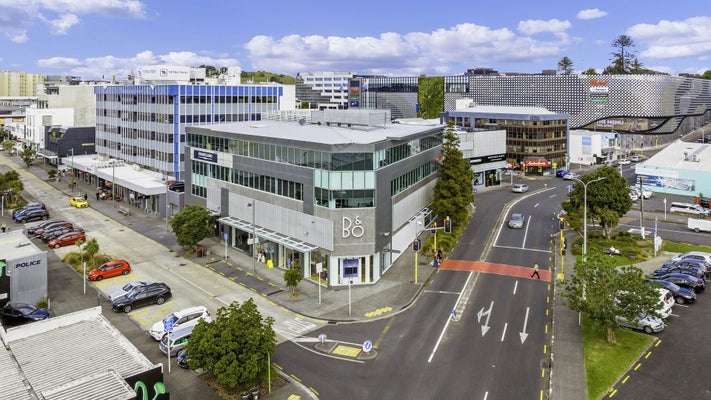
35 Teed Street, Newmarket, Auckland

296 Peake Road, Cambridge
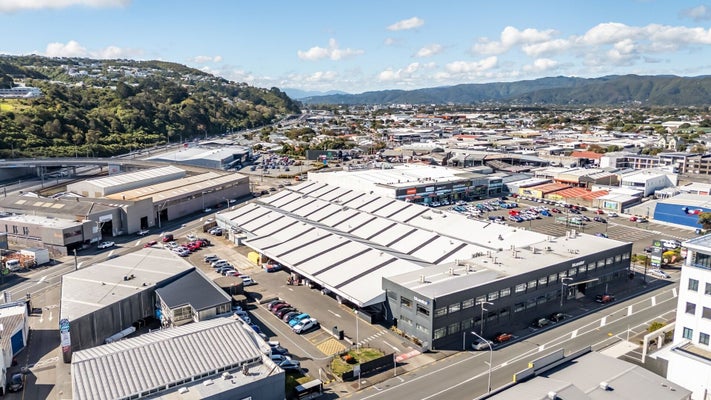
33-43 Jackson Street, Petone, Lower Hutt
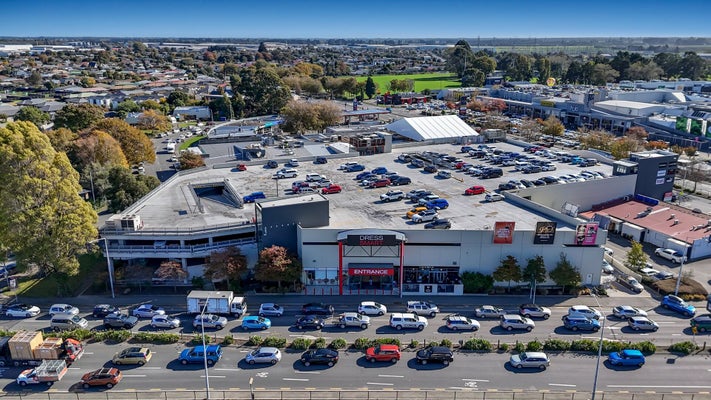
Dress Smart Hornby, Christchurch
Contact us


