


Total Property -
Retail therapy
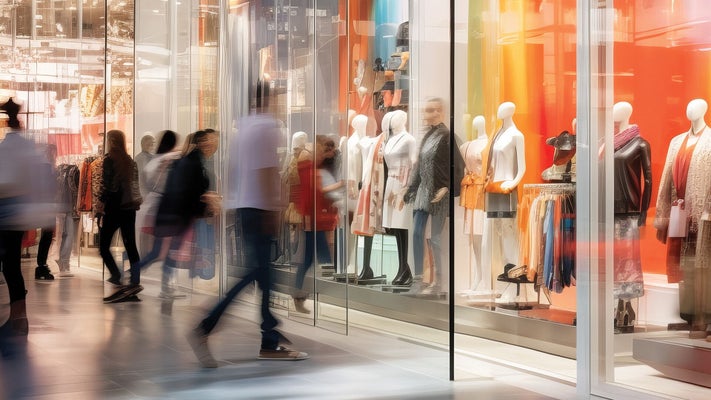
Despite variability in consumer spending, the retail property sector is showing renewed depth with capital re engaging, leading brands moving into new markets, and developers delivering high quality space.
The first quarter of this year marked a shift in momentum for New Zealand’s retail property sector, with cautious optimism returning and conditions lifting from weak to neutral across both leasing and investment activity, according to Bayleys’ New Zealand retail market update 2026.
The report noted that retail property was moving through a transitional phase and at the time of publication, it appeared the worst of the downturn was behind us from a consumer spending perspective. A full recovery, however, was expected to depend on sustained consumer confidence and clearer economic signals. Then the escalating geopolitical conflict entered the conversation and changed some core fundamentals almost overnight.
Bayleys analyst Samantha Lee says the report reflects Q1 2026 market sentiment and data, capturing economic conditions before the Middle East crisis intensified. She notes that subsequent spikes in fuel costs and emerging supply chain pressures were not yet reflected in the data, which helps explain the more subdued consumer and business sentiment now emerging in the market.
“We are seeing some pockets of hesitation from occupiers, particularly smaller retailers that are more exposed to changes in consumer spending. However, many larger retailers are looking ahead of current uncertainty and continuing to make leasing decisions based on the longer-term growth picture.
“Lower interest rates had eased some pressure on household budgets, giving retailers hope for an uplift in consumer spending. Although the recent rise in rates sounds negative, the upward trajectory isn’t unexpected as the Reserve Bank has been signalling this path for some time.”
Large-format retail leads the way
Large‑format retail continues to perform strongly, with tight vacancy across most regions and solid tenant demand. In contrast, CBD retail is still under pressure, with vacancy sitting at 14.9 percent in Auckland and 5.6 percent in Wellington as hybrid working patterns weigh on foot traffic. The pending opening of the City Rail Link in Auckland is expected to revitalise retail around the CBD stations.
Leasing timeframes for smaller shop tenancies remain highly variable, driven by location and landlord rental expectations, and performance across the regions is uneven, with the South Island generally outpacing the North.
Internal migration is supporting centres such as Christchurch where there’s new development activity, Timaru, Queenstown, and Dunedin.
Relative easing of funding costs and competitive tension has sparked demand for well-priced retail assets. Buyers remain highly selective, however, with both syndicators and private capital focusing on core and value-add opportunities. Yields have stabilised following a volatile period, with improving transaction volumes providing clearer pricing signals.
Construction cost pressures were easing at the time of the report release, improving project feasibility, but with the cost of imported materials now rising off the back of the fuel shortage situation, it’s a moving target. “Regardless, tenant pre-commitments remain critical, so while well-located projects with confirmed anchor tenants are progressing; speculative development remains limited,” explains Lee.
Capital looking for a home
Bayleys director of retail, Chris Beasleigh says retailers and investors can only play the ball in front of them, acknowledging that current market conditions present challenges for all parties. He notes that retailers are again grappling with supply‑chain pressures and margin compression.
“From what we’re seeing in the retail real estate sales and leasing markets, the geopolitical landscape is delivering a blow rather than a knockout punch.
“There is still plenty of choice in the marketplace for business operators and investors. Major brands continue to push ahead to secure their position, and new developments are progressing across the country.”
There’s significant capital seeking a home, and Beasleigh says investors are increasingly viewing retail as an opportunity – particularly in residential growth precincts, areas where rental uplift can be unlocked, or a more functional tenant mix can be achieved.
“Buyers are looking for the right asset, and we’re seeing this globally as retail enjoys renewed attention. Performance is becoming more differentiated, with premium retail corridors, LFR, and experience‑led centres outperforming traditional strip retail.”
New retail models
Beasleigh says investors are taking a longer‑term economic view, and stresses that the retail sector has always experienced churn.
“While media coverage often attributes closure solely to economic conditions, not all business failures stem from the market. Some businesses are simply not viable, efficient, or relevant, or have lacked the agility to adapt to shifting consumer expectations and a changing retail environment.
“There will always be entrepreneurial operators willing to test new or revised retail concepts, and they deserve recognition for that.
“At 131 Queen Street, we’re now seeing the emergence of Faradays, a new luxury department store set to open by August, reportedly with around 130 brands on board. This comes after the decline of large department stores over the past decade, most notably the closure of Auckland institution Smith & Caughey’s last year.
“It’s a reminder that while some formats fade, others flex to meet changing consumer expectations.”
Beasleigh says retail naturally evolves as society changes, with global trends increasingly shaping local expectations. As people are exposed to new ideas through travel and social media, the retail landscape shifts to reflect those influences.
“What’s considered ‘in’ is constantly changing. Today we have dedicated matcha cafés and Korean fried chicken outlets, ideas that barely existed in this market even five years ago. Vinyl record stores, pushed aside by other formats and digital streaming, are now making a noticeable comeback.
“Retail trends move in cycles, and consumer tastes continue to reshape the operating landscape.”
The halo effect in Auckland
Identified growth corridors are seeing strong investor interest in retail assets, with halo areas around Auckland city leading the way.
Where there’s been residential intensification with land being opened up for development, retail is thriving in growing communities, says Beasleigh.
“In the northwest corridor, Westgate Town Centre is burgeoning, with the arrival of Costco fuelling investment and tenant uptake. Zone 6 is now under construction and will be anchored by the country’s largest Kmart, which is acting as a magnet for other operators across retail segments.
“In Drury, a growing retail pipeline is forming alongside major housing expansion, focusing on neighbourhood centres, large format retail, and supermarket anchored projects. News that Costco has secured a site in the precinct will only stimulate further activity and interest.
“And in Silverdale, north of Auckland, more than a decade of pent‑up demand for retail space is finally being addressed, with a new development planned for a site on Blanc Road.”

A shift towards destinaton-led retail precincts
Experiential retail is expanding rapidly in New Zealand and reshaping the market, but it’s taking a different guise from the entertainment‑heavy flagship malls seen overseas.
In Auckland, retail is activity‑led, mixed‑use, and destination‑based, with major precincts now competing on experience rather than pure retail mix. We’re seeing a move toward destination retail ecosystems shaped by housing growth, and global brands testing flagship formats.
Sylvia Park Precinct
The wider precinct is evolving into a regional lifestyle hub, integrating cinema, dining, events, offices and New Zealand’s largest build‑to‑rent project.
IKEA is its global‑standard experiential anchor, with the 34,000sqm Sylvia Park flagship store combining walk‑through room sets, a Swedish restaurant, and circular‑economy services, positioning the store as a half‑day destination. It sets a new benchmark for scale and customer engagement, and is influencing precinct development and consumer expectations.
Commercial Bay, downtown Auckland
Auckland’s CBD has been repositioned around food, fashion and social experience. Hospitality is the primary draw, with premium retail layered around it to drive dwell time.
Westfield Newmarket
A premium mall format built around experience and brand environment with rooftop dining, flagship stores, and purpose‑built experiential spaces differentiating it from traditional mall retail.
Mānawa Bay, Auckland Airport
A new premium outlet centre, spanning around 35,000sqm and housing more than 100 brands. Positioned as the country’s first purpose built outlet mall, and representing an important shift in New Zealand retail typologies as airport adjacent precincts evolve into full destination environments.
Westgate, Northwest Auckland
Multi-billion-dollar global retailer Costco now anchors the Westgate precinct and reinforces the destination bulk retail model, driving large‑format clustering and infrastructure‑led expansion. New Zealand’s largest Kmart store at 6,700sqm will open later this year at the Maki Place Retail Centre in Westgate.
Significant retail developments currently leasing through Bayleys
Blanc Road, Silverdale
Leasing has commenced for a bulk retail development being undertaken by experienced Auckland-based investor and developer, Matvin Group just off the Silverdale arterial, Tavern Road. Earthworks are underway, building design and consents are in train, with the bulk of construction expected to commence Q3 2026 and be complete Q3-Q4 2027.
Pacific Gardens, 834 Great South Road, Wiri
Construction has started on a 14,000sqm retail hub, launching Q3/Q4 2027, with Panda Mart confirmed as anchor tenant, and a range of tenancy sizes available suitable for gym operators, large-format retailers, and food and beverage outlets.
Maki Place, Westgate
Leasing now – Zone 6 large-format retail development under development by NZ Retail Property Group within the Westgate Town Centre precinct, one of the largest retail expansion zones in the country. Offering 39 retail tenancies across 22,122sqm, anchored by a 6,700sqm Kmart store, with a specialty food area and 614 car parks.
The Showgrounds, Evans Street, Timaru
Now leasing Stage 2 of Timaru’s newest development anchored by Bunnings, Chemist Warehouse, Woolworths, Bed Bath & Beyond, and Look Sharp. Stage 1 is trading, Stage 2 has a targeted opening of Q4 2027, and subsequent Stage 3 is pending.
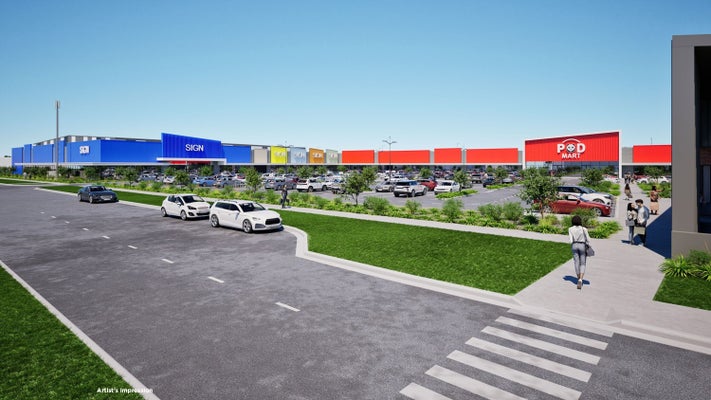
Pacific Gardens, 834 Great South Road, Wiri, Auckland
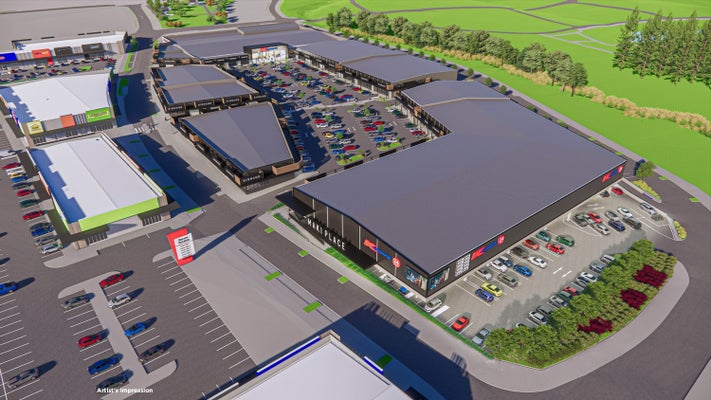
Zone 6, Maki Place, Westgate, Auckland
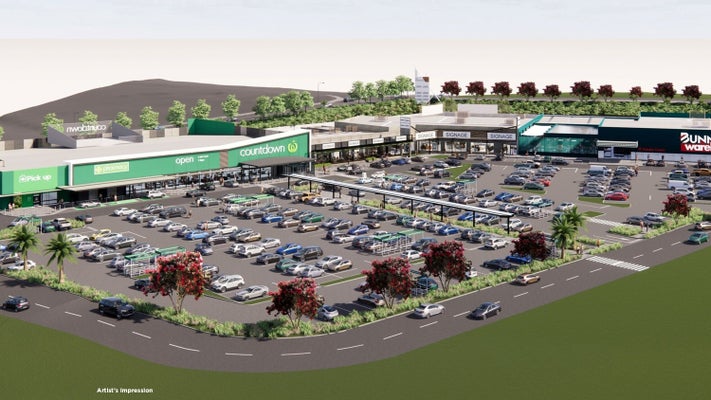
Stage 2, The Showgrounds, Evans Street, Timaru
Contact us


